In this article
"100% commission" is the most searched phrase in brokerage recruiting, and the least precise. Every 100% brokerage still makes money from you. The only questions are how, how much, and whether what you get back is worth it.
This guide shows how the model works, the fees that actually decide your take-home, and the math at real production levels. The REVOL numbers are published on our commission plans page, so you can check every figure.
How 100% commission works
On a traditional split, the brokerage keeps a percentage of every commission: 30% on a 70/30 split, often until you hit an annual cap. On a 100% plan you keep the whole commission. The brokerage charges flat fees instead:
- A monthly fee, whether or not you close anything that month
- A per-transaction fee, charged each time you close
- Other fees, such as annual dues, technology, E&O insurance, or an administrative fee charged to your client
The trade is simple. A split costs more as you produce more, until the cap. A flat-fee plan costs the same per deal no matter how big the deal is. The busier you are, the better 100% looks.
The fees that decide what you keep
Two brokerages can both advertise "100%" and leave you with very different checks. Ask every brokerage for these, in writing:
| Fee | What to ask | Why it matters |
|---|---|---|
| Monthly fee | Is it charged every month, even with no closings? | It's your fixed cost in a slow year |
| Per-transaction fee | Is it per side or per deal? Is it capped? | At 20 deals a year, $400 vs $0 is $8,000 |
| Annual or one-time fees | Onboarding, renewal, "membership" | Easy to miss when comparing |
| Technology fee | What's included, and what costs extra? | A CRM and website can cost more than the plan |
| E&O insurance | Included, per deal, or annual? | Often a few hundred dollars a year |
| Client-paid fees | Anything charged to your buyer or seller at settlement | Your clients see it, so you should know it |
The math at real production levels
Here's what REVOL's two 100% plans cost per year, at $10,000 average commission per closing. These come straight from the published schedule: Lite is $49 a month plus $395 per closing, and Full is $249 a month flat.
| Closings per year | Gross commission | Lite: you pay | Full: you pay | Cheaper plan |
|---|---|---|---|---|
| 4 | $40,000 | $2,168 | $2,988 | Lite |
| 6 | $60,000 | $2,958 | $2,988 | Lite (by $30) |
| 8 | $80,000 | $3,748 | $2,988 | Full |
| 12 | $120,000 | $5,328 | $2,988 | Full |
| 20 | $200,000 | $8,488 | $2,988 | Full |
The rule is one sentence: under 7 closings a year, Lite; 7 or more, Full. You can switch with 30 days' notice, so you're never locked into the wrong one.
For comparison, a 70/30 split with a $15,000 cap costs $12,000 at 4 closings and hits the full $15,000 by 5. That's the cost a 100% plan replaces.
The $495 broker administrative fee is charged to the client at settlement on every REVOL plan. It doesn't come out of your check. The optional $75/month Lofty + GoHighLevel technology bundle is extra on Lite and Full.
When 100% commission is the wrong choice
A 100% plan is a great deal if you already have business. It's a bad deal if you don't. Be honest about three things:
- Do you generate your own leads? 100% plans almost never include company leads. If your pipeline depends on the brokerage, you need a plan that feeds it.
- Do you need coaching? Flat-fee brokerages keep costs low by not paying for heavy training or mentorship.
- Is your income steady? A monthly fee is due in January whether or not you closed in December.
That's why REVOL publishes two paths. Lite and Full are for agents who bring their own business. Launch (70/30) and Growth (80/20) include company leads at a 50/50 split, outside the $15,000 cap, for agents who want a pipeline.
What to look for beyond the fee schedule
The cheapest brokerage isn't the goal. The one that leaves you with the most money and the best business is. Beyond fees, compare:
- Broker access. Will the broker take your call on a deal that's going sideways?
- Technology. Is the CRM included, and will you actually use it?
- Growth options. Can you add income without adding more transactions? At REVOL, agents can get insurance licensed and earn on policies that renew each year. How that works.
- Exit terms. What happens to your pendings if you leave?
The bottom line
100% commission is a pricing model, not a promise. Get the full fee schedule, put your real closings into the math, and compare what you'd keep, not what's advertised. If you're closing 7 or more deals a year and generating your own business, a flat-fee plan will almost certainly put thousands more in your pocket than a split.
Run your numbers in the calculator, or watch the private webinar for the full walk-through of every REVOL plan.
Frequently asked questions
What does 100% commission mean in real estate?
You keep the entire commission your brokerage receives on a deal, with no split. In exchange you pay the brokerage a flat monthly fee, a per-transaction fee, or both.
Is a 100% commission brokerage worth it in Maryland?
It usually is if you generate your own business and close more than a few deals a year. If you need leads, coaching or a lot of hand-holding, a split plan that includes them can be worth more. Run both with your real numbers.
What fees should I ask a 100% brokerage about?
Monthly fee, per-transaction fee, annual or one-time fees, E&O, technology fees, and any fee charged to your client at settlement. Ask for the whole schedule in writing.
What does REVOL charge on its 100% plans?
Lite is $49 a month plus $395 per closing. Full is $249 a month with no per-closing fee. A $495 broker administrative fee is charged to the client at settlement on all plans, and a $75/month technology bundle is optional.
Can I get leads on a 100% commission plan?
Usually not, at REVOL or elsewhere. 100% plans are priced for agents who bring their own business. REVOL's Launch and Growth plans include company leads at a 50/50 split instead.
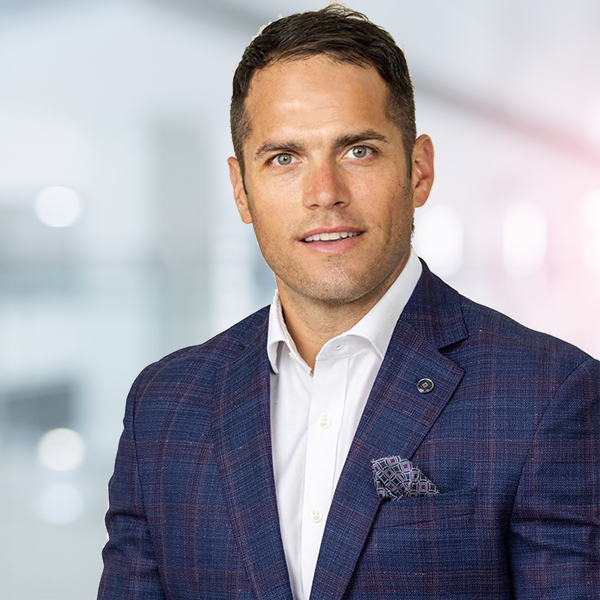
Ryan was a top-producing RE/MAX agent from 2015 to 2019 before founding REVOL Real Estate in Timonium, Maryland. He built REVOL around one idea: a brokerage should invest in its agents, not just collect from them.